
How attacks happen, and the habits that stop them
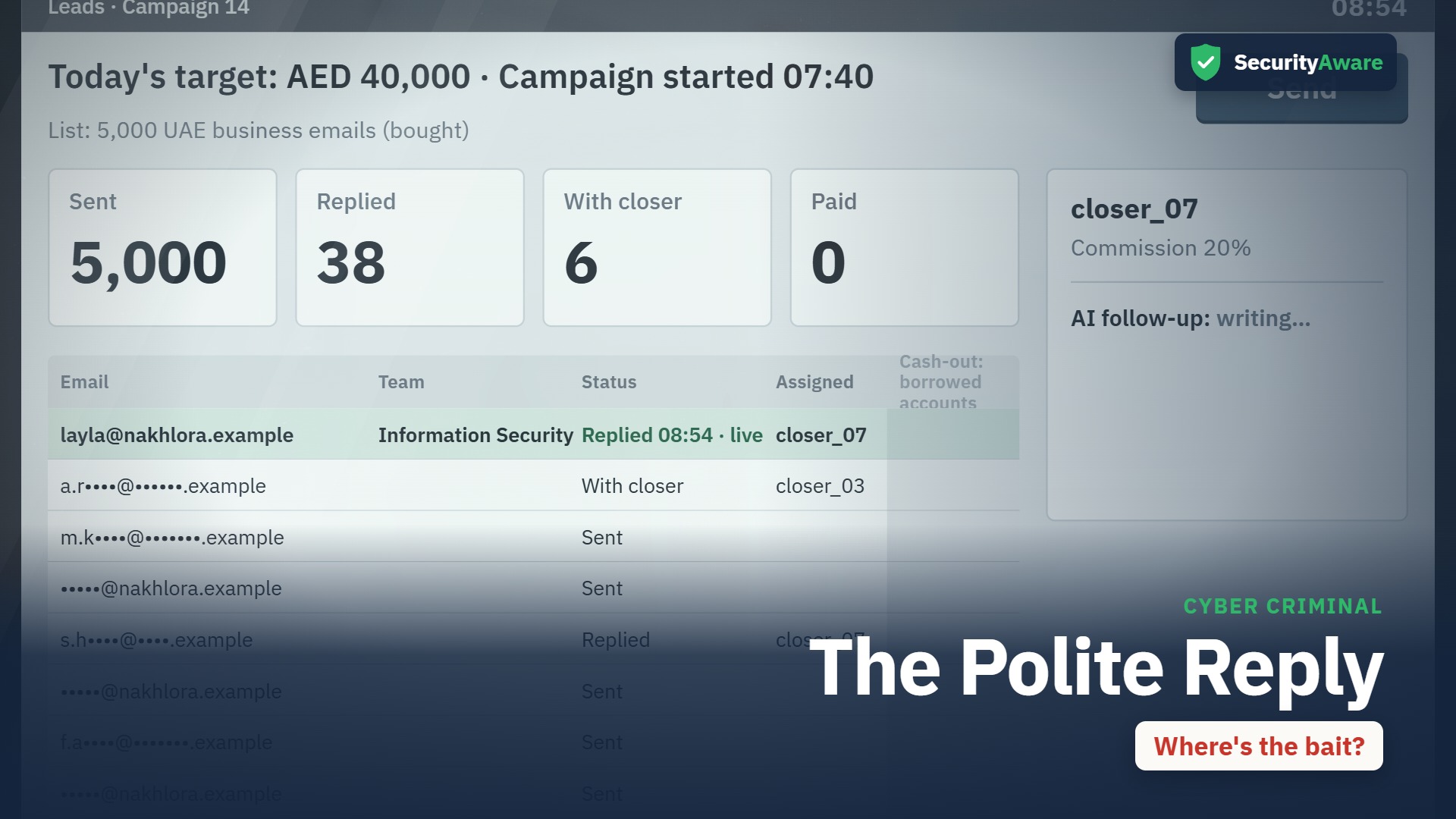
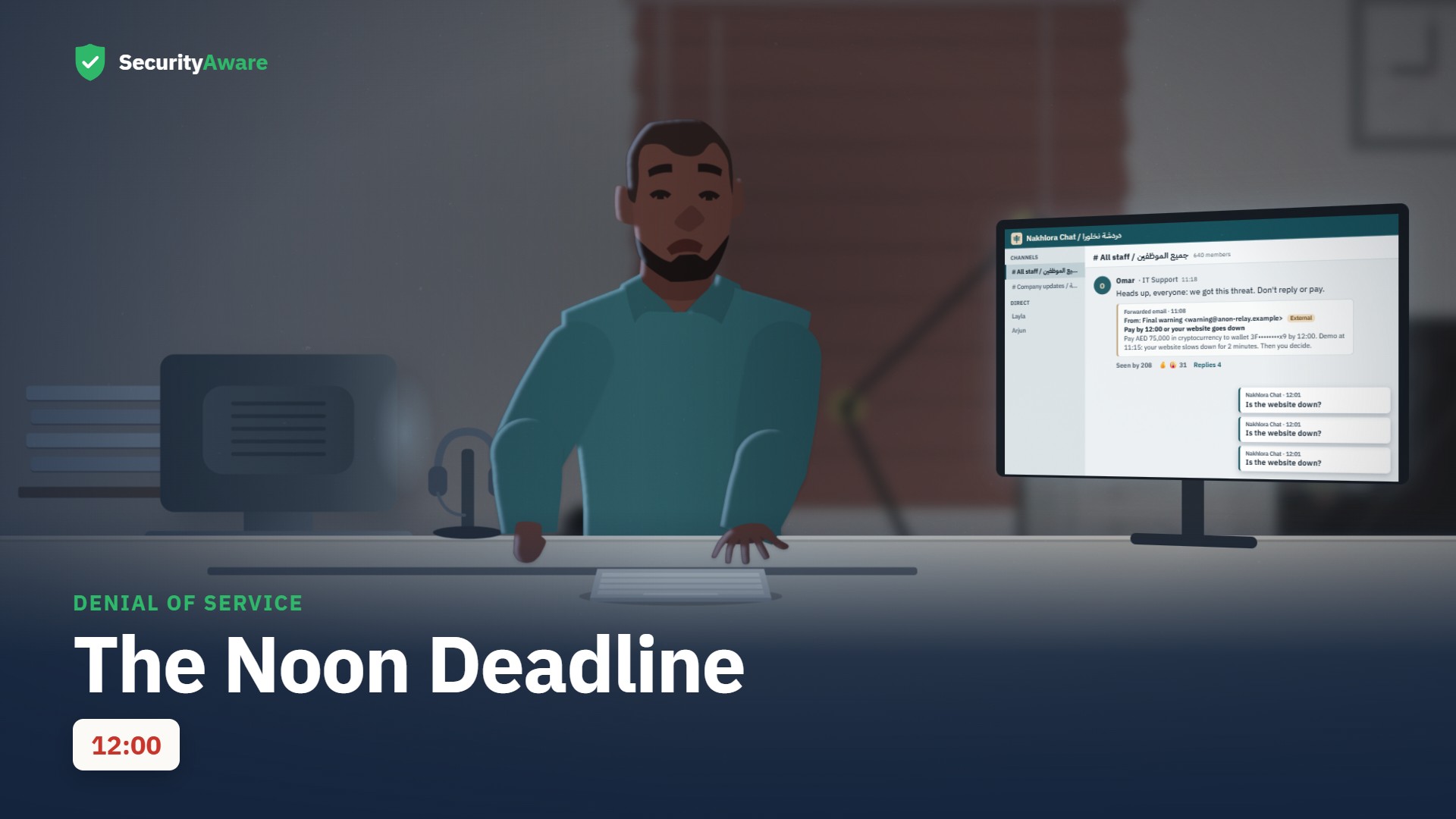
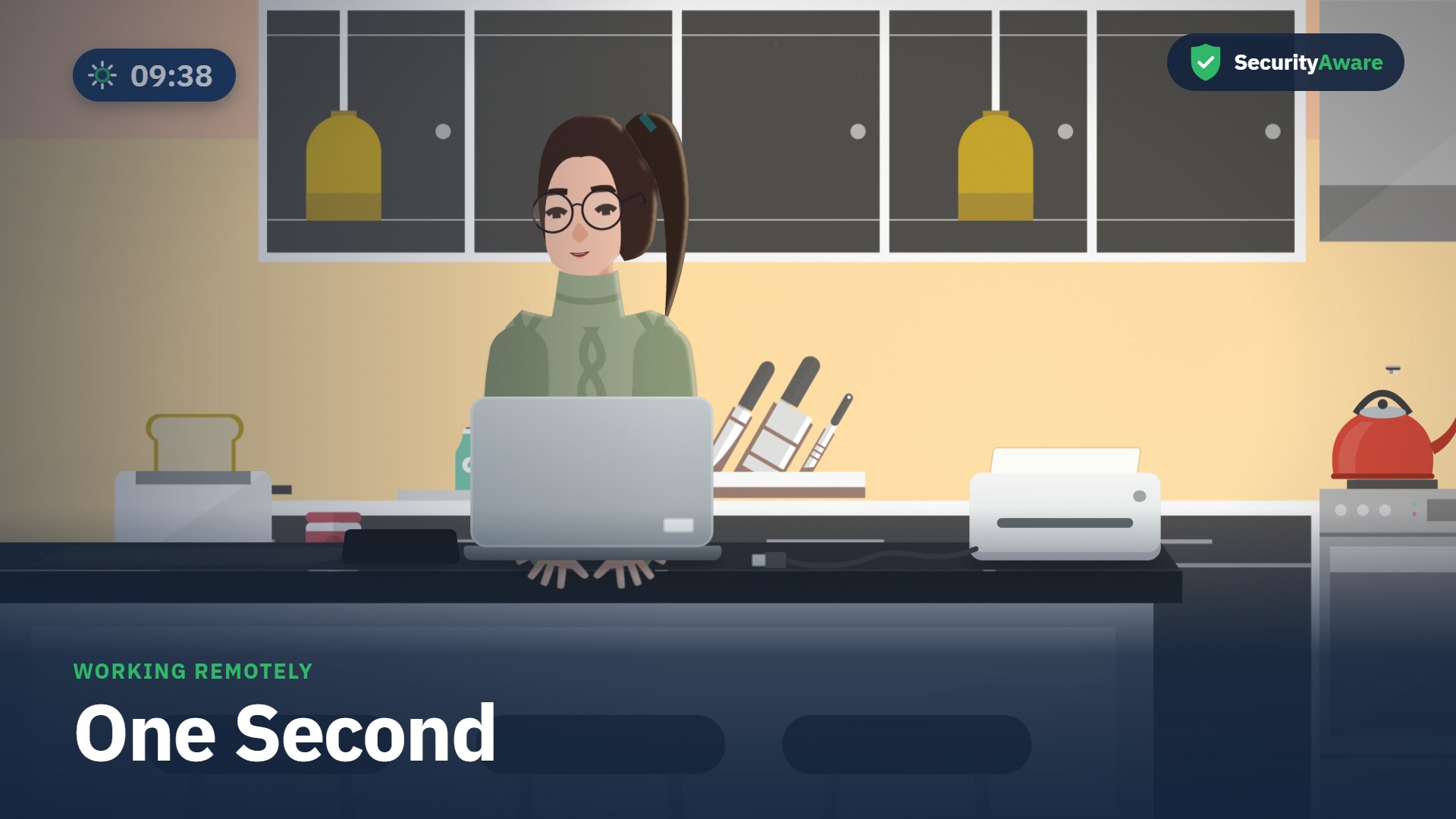
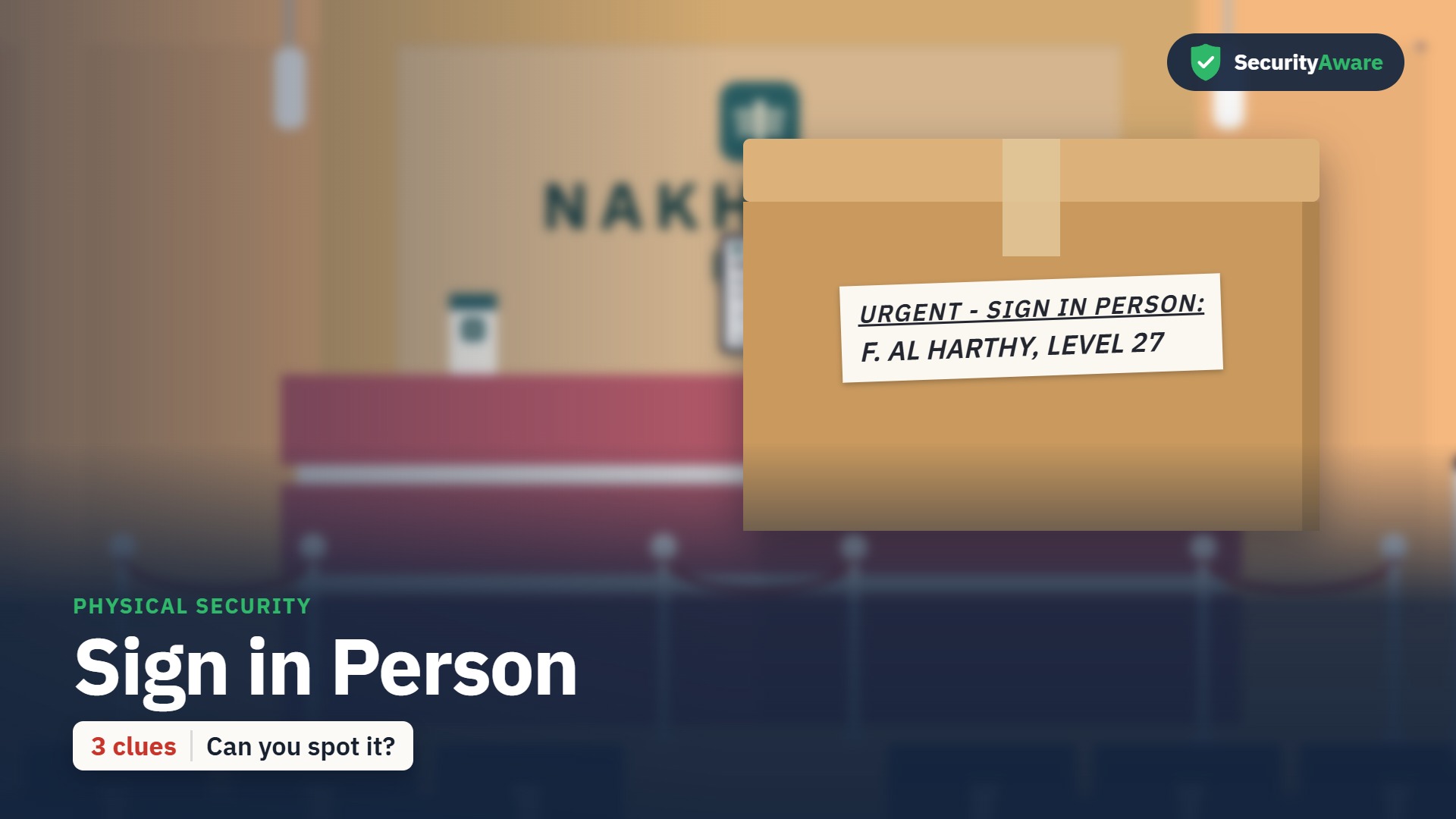
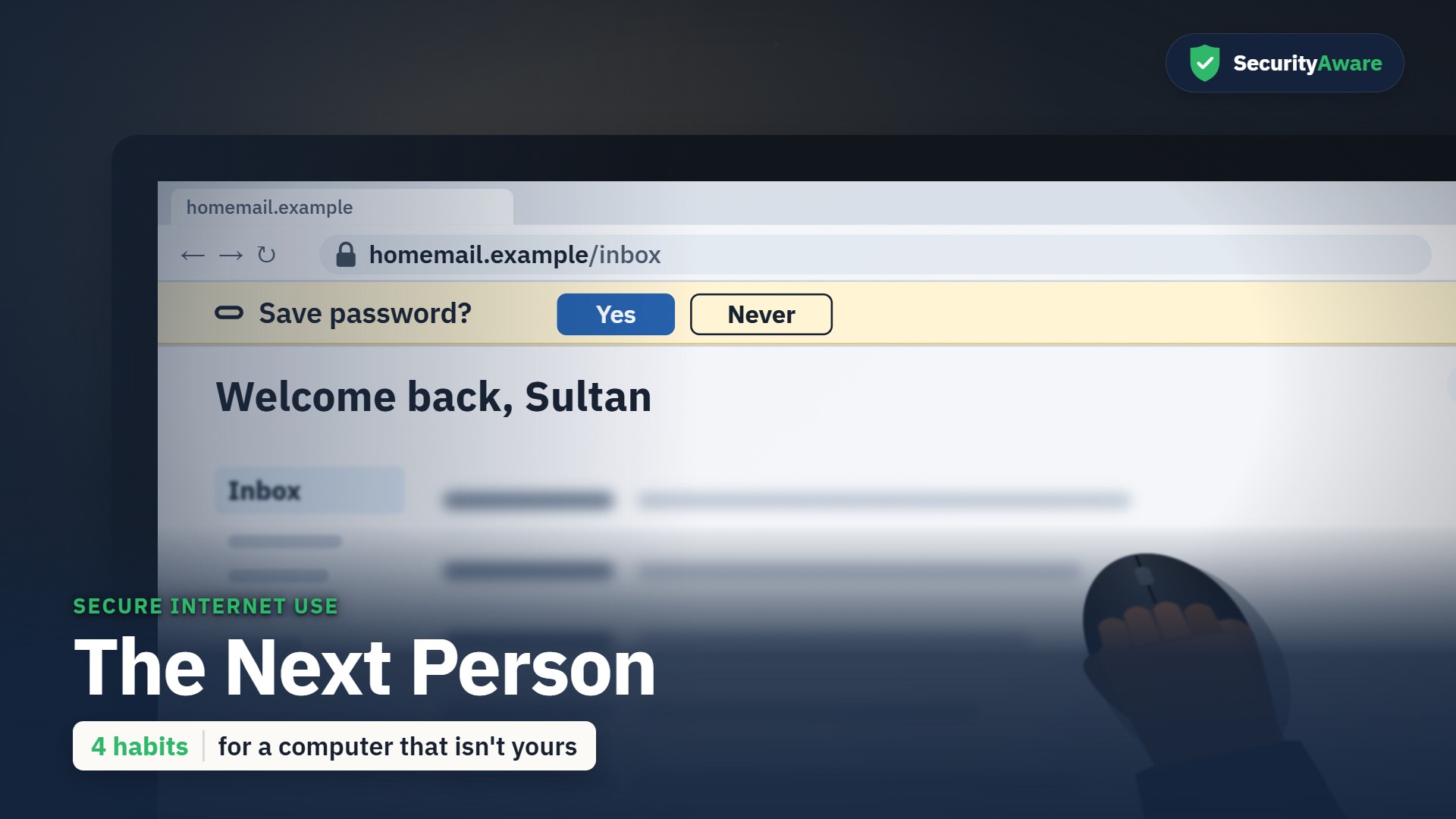
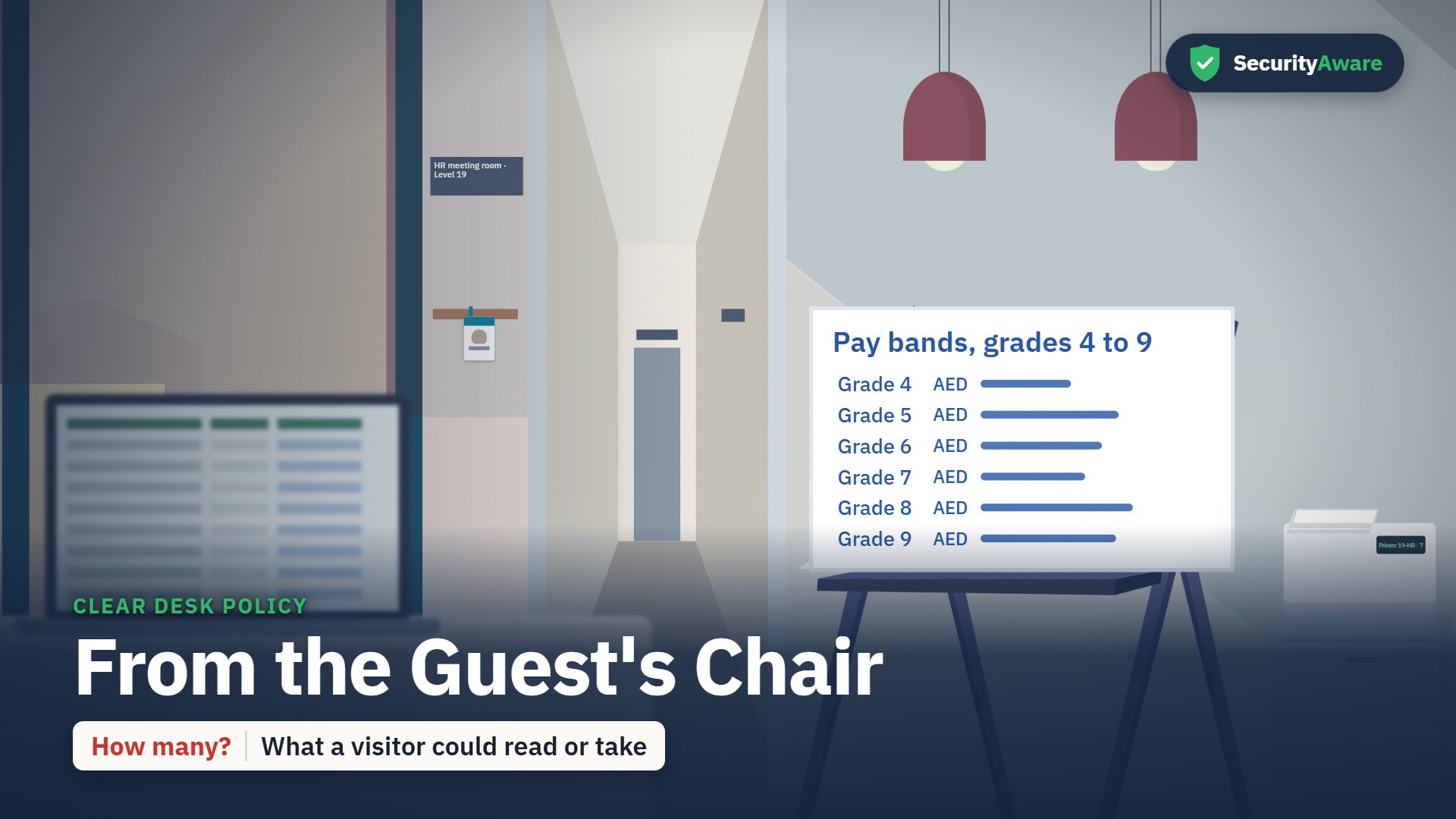
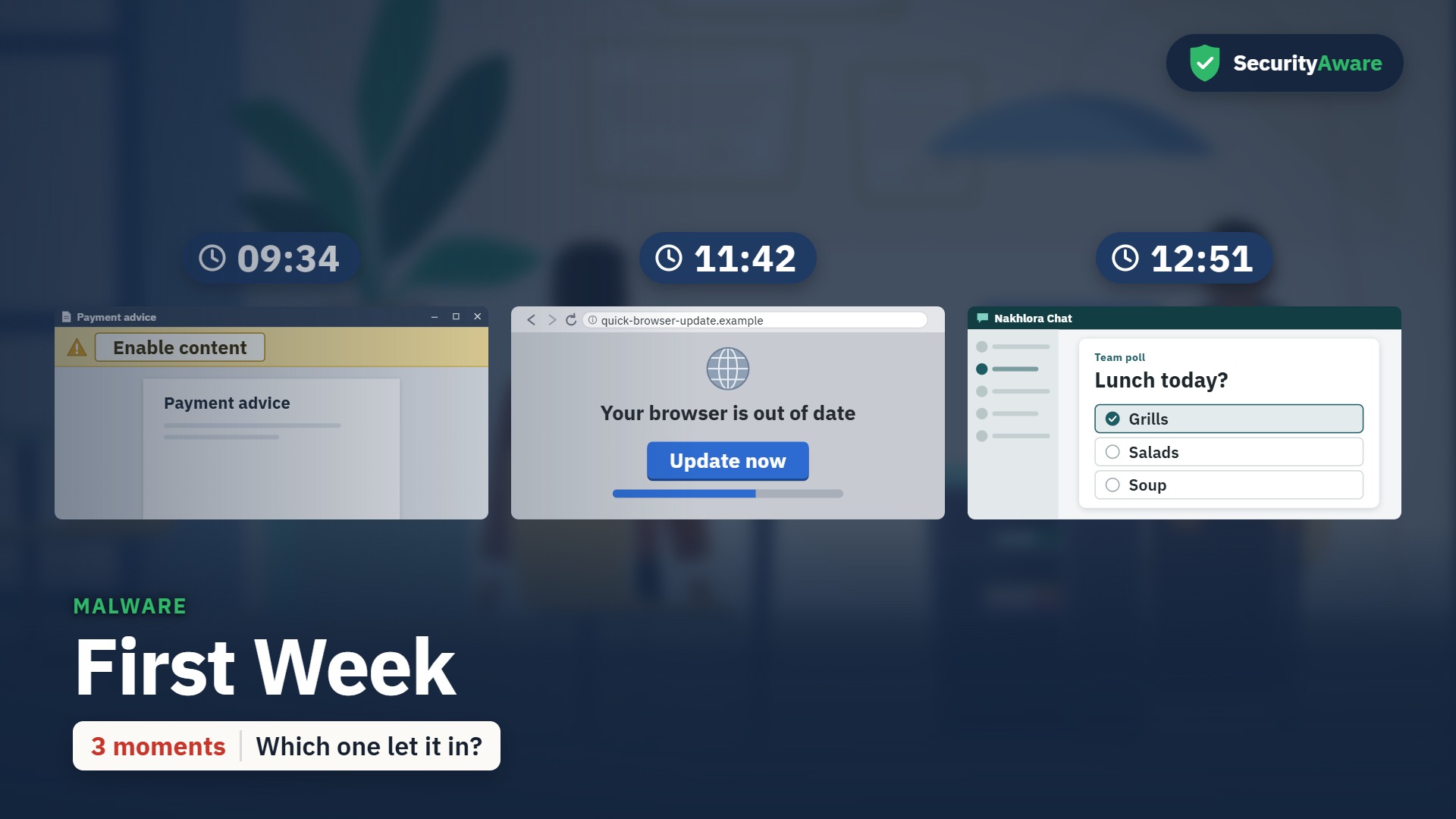
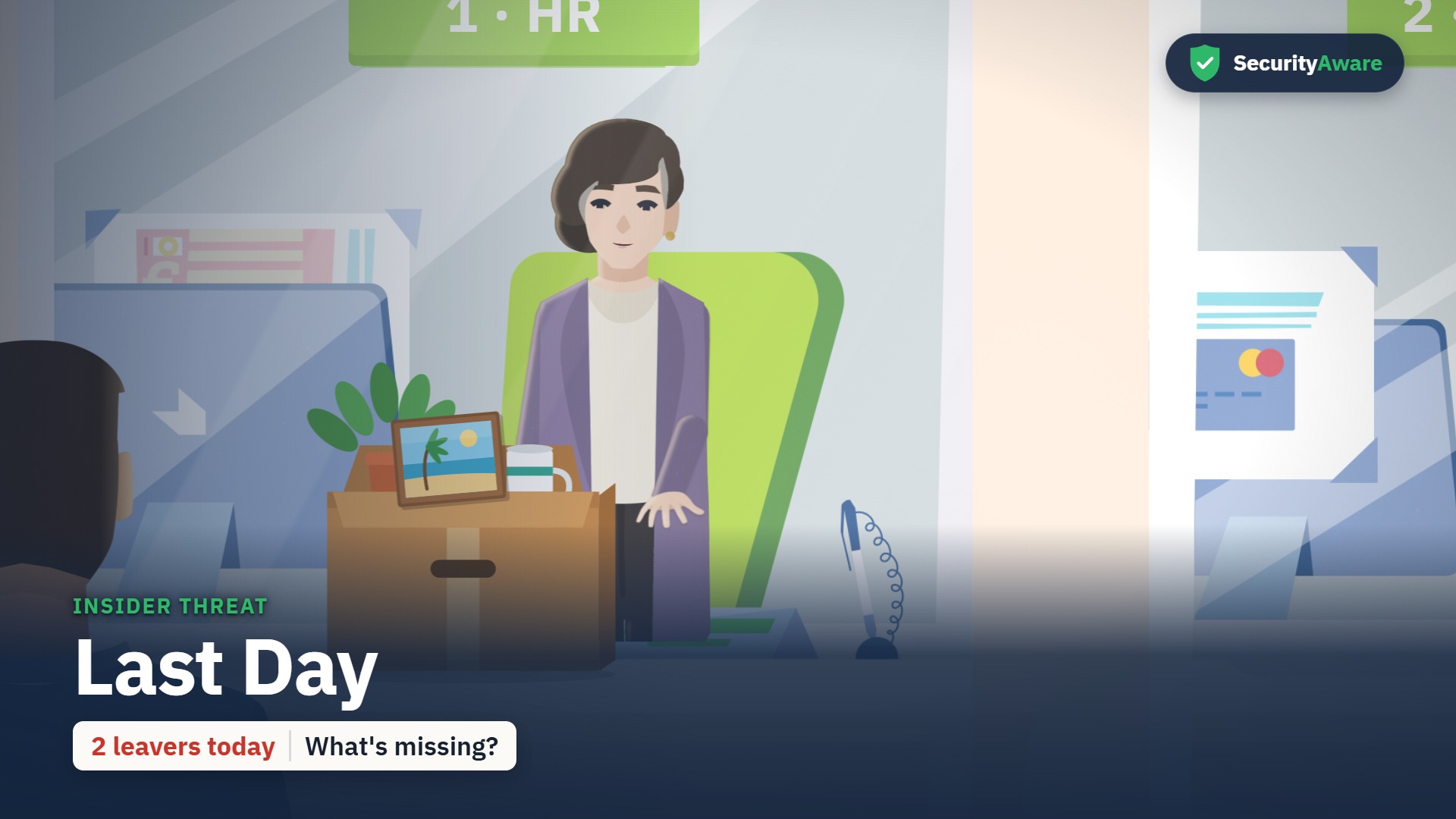
This group covers how attacks actually happen and the workplace habits that stop them: who cyber criminals are and how they make money, what an outage attack looks like, how ransomware starts and why you report fast instead of “fixing” it, how malware gets in, fake websites and cracked software, and the quiet risks inside the office — tailgating, a clear desk seen from the guest’s chair, the leaver copying files on their last day. Thirteen SecurityAware courses, each a short animated story with a scenario quiz, in English and Arabic, set in one fictional Gulf company.
This group covers how attacks actually happen and the workplace habits that stop them: who cyber criminals are and how they make money, what an outage attack looks like, how ransomware starts and why you report fast instead of “fixing” it, how malware gets in, fake websites and cracked software, and the quiet risks inside the office — tailgating, a clear desk seen from the guest’s chair, the leaver copying files on their last day. Thirteen SecurityAware courses, each a short animated story with a scenario quiz, in English and Arabic, set in one fictional Gulf company.
Courses (13)

Questions people ask
What is in the threats and safe workplace group?
Cyber criminals, denial of service, ransomware, malicious websites and apps, malware, state-sponsored threats, safe internet use, working remotely, physical security, video conferencing, security at home, clear desk, and the insider threat.
Which course covers ransomware?
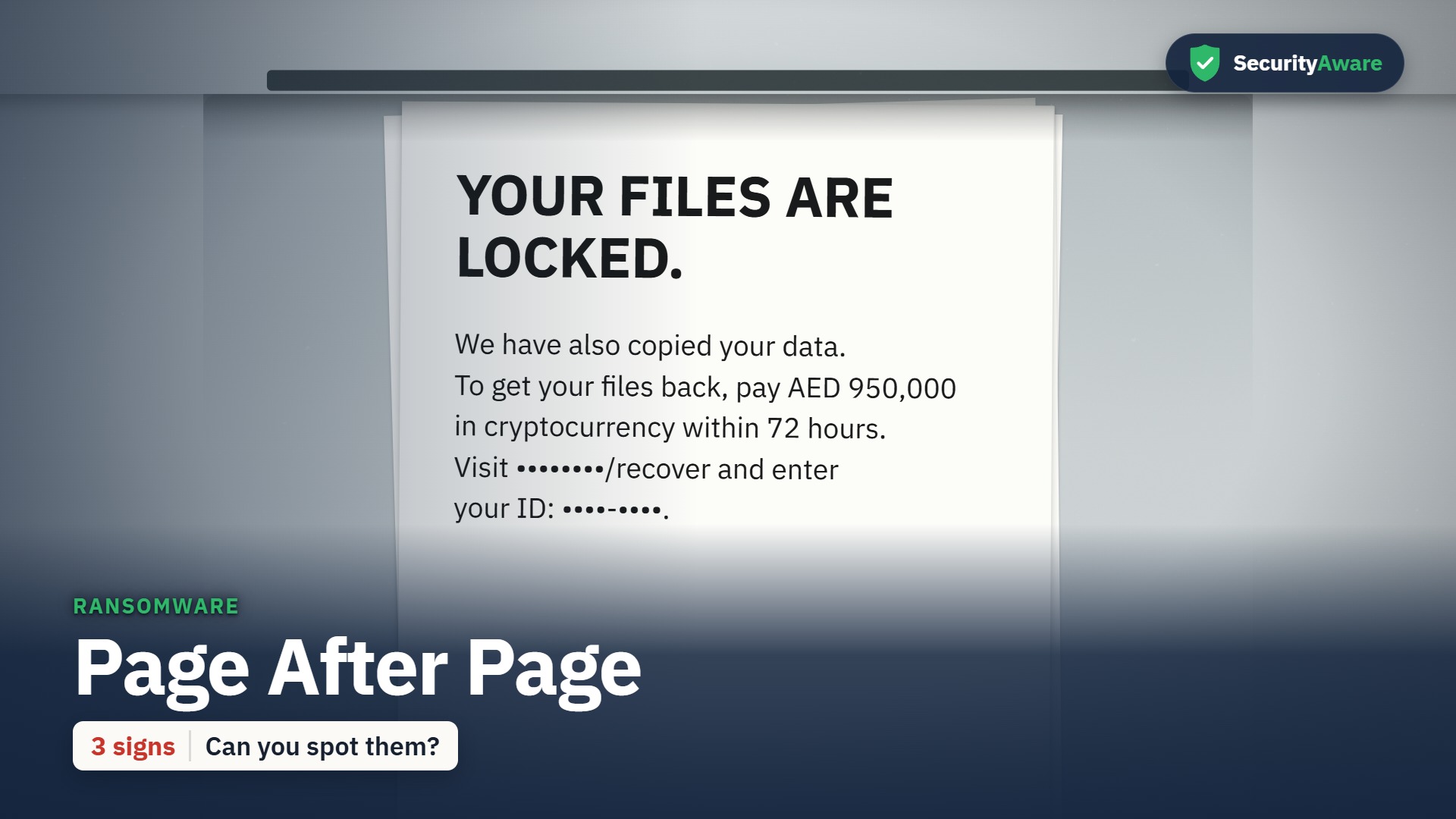
Course 2042, “Page After Page”: how ransomware starts, the first minutes, don’t pay, report fast.
How long are the courses?
Each is a 2–3.5 minute animated story with a scenario quiz, in English and Arabic.